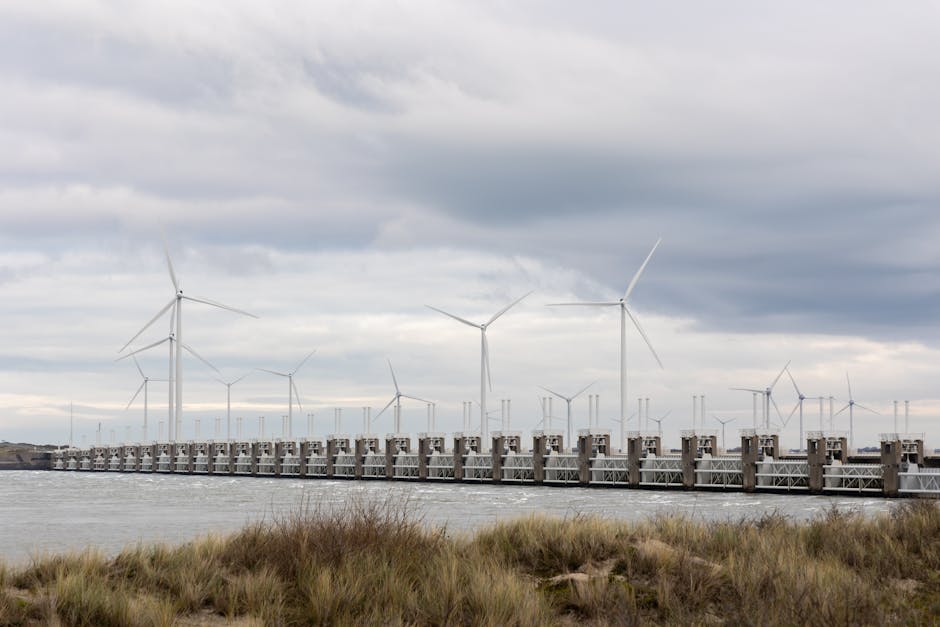
Green hydrogen represents a promising frontier in the quest for a decarbonized global economy. Unlike traditional hydrogen production, which often relies on fossil fuels and emits significant carbon dioxide, green hydrogen is produced using renewable energy sources. This clean production method positions it as a vital component in achieving ambitious climate goals and transitioning away from carbon-intensive industries.

The core principle behind green hydrogen production involves a process called electrolysis. In this method, electricity is used to split water molecules (H₂O) into their constituent elements: hydrogen (H₂) and oxygen (O₂). When the electricity powering this electrolysis comes exclusively from renewable sources like solar, wind, or hydropower, the resulting hydrogen is classified as “green.”
This distinction is crucial because hydrogen itself is an energy carrier, not a primary energy source. Its environmental impact depends entirely on how it is produced. Green hydrogen offers a pathway to harness the power of renewables and store it in a versatile fuel form, enabling its use in sectors where direct electrification is challenging.
The Production Process of Green Hydrogen
The journey of green hydrogen begins with the generation of clean electricity. For instance, a solar farm or a wind turbine array can feed power directly into an electrolyzer. This electrolyzer contains electrodes submerged in water, often with an electrolyte to enhance conductivity.
When the renewable electricity flows through the electrolyzer, it initiates an electrochemical reaction. Water molecules at one electrode release electrons and break apart, forming oxygen gas and hydrogen ions. These hydrogen ions then migrate to the other electrode, where they gain electrons and combine to form hydrogen gas.
The resulting hydrogen gas is then collected, purified, and can be stored or transported for various applications. The oxygen produced as a byproduct is released into the atmosphere or can be captured for industrial uses, making the entire process remarkably clean and efficient in terms of material utilization.
Several types of electrolyzers exist, each with different efficiencies and operational characteristics. Proton Exchange Membrane (PEM) electrolyzers and Alkaline electrolyzers are two common technologies currently in use and under development. Advances in these technologies are continuously improving efficiency and reducing costs, making green hydrogen increasingly viable.
Applications and Impact on Decarbonization
Green hydrogen holds immense potential for decarbonizing sectors that are difficult to electrify directly. One significant application is in heavy industry, particularly in steel and chemical production. These industries currently rely heavily on fossil fuels for high-temperature processes and as chemical feedstocks, leading to substantial carbon emissions.
For example, green hydrogen can replace coal in steelmaking, transitioning from a carbon-intensive blast furnace process to direct reduction iron (DRI) production with hydrogen. This change dramatically reduces the carbon footprint of steel, a fundamental material for infrastructure and manufacturing. Similarly, it can be used to produce green ammonia, a crucial component for fertilizers and a potential clean shipping fuel.
In the transportation sector, green hydrogen offers a zero-emission alternative for heavy-duty vehicles, shipping, and aviation. While battery electric vehicles are suitable for many applications, long-haul trucks, trains, ships, and aircraft require higher energy density fuels. Hydrogen fuel cells convert hydrogen into electricity, powering vehicles with only water as a byproduct.
Furthermore, green hydrogen can play a critical role in grid balancing and energy storage. Renewable energy sources like solar and wind are intermittent, meaning their output fluctuates. When renewable generation exceeds demand, excess electricity can be used to produce green hydrogen, effectively storing that energy. This stored hydrogen can then be converted back into electricity via fuel cells or turbines when demand is high or renewable output is low, providing grid stability.
Another practical application is blending green hydrogen into existing natural gas pipelines. While this is a transitional step, it can immediately reduce the